News & Stories
Press Release
05 October 2026
Making Justice Reachable: CIJ Presents Position Paper on Court-Annexed ADR at SEACJF 2026
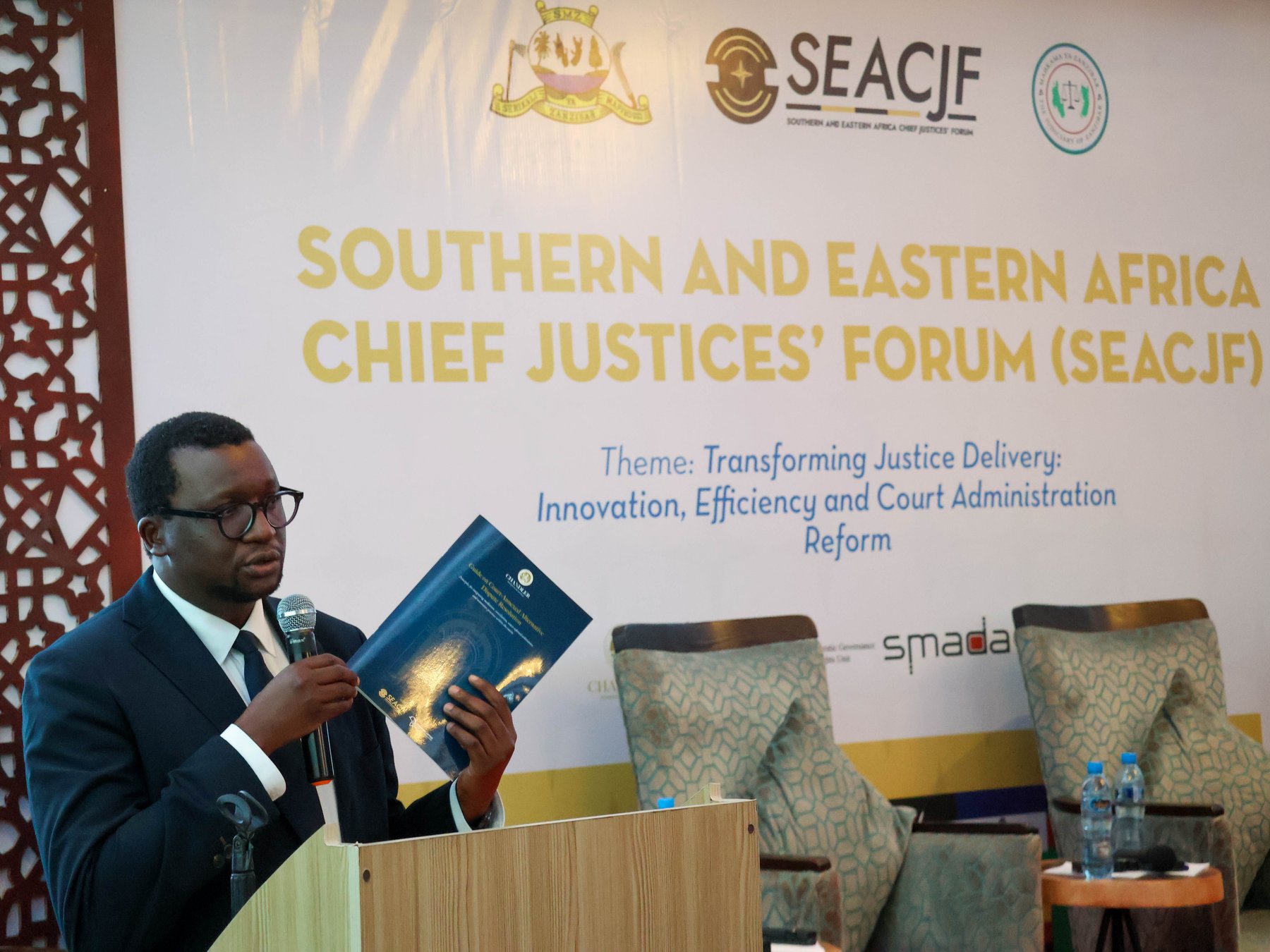
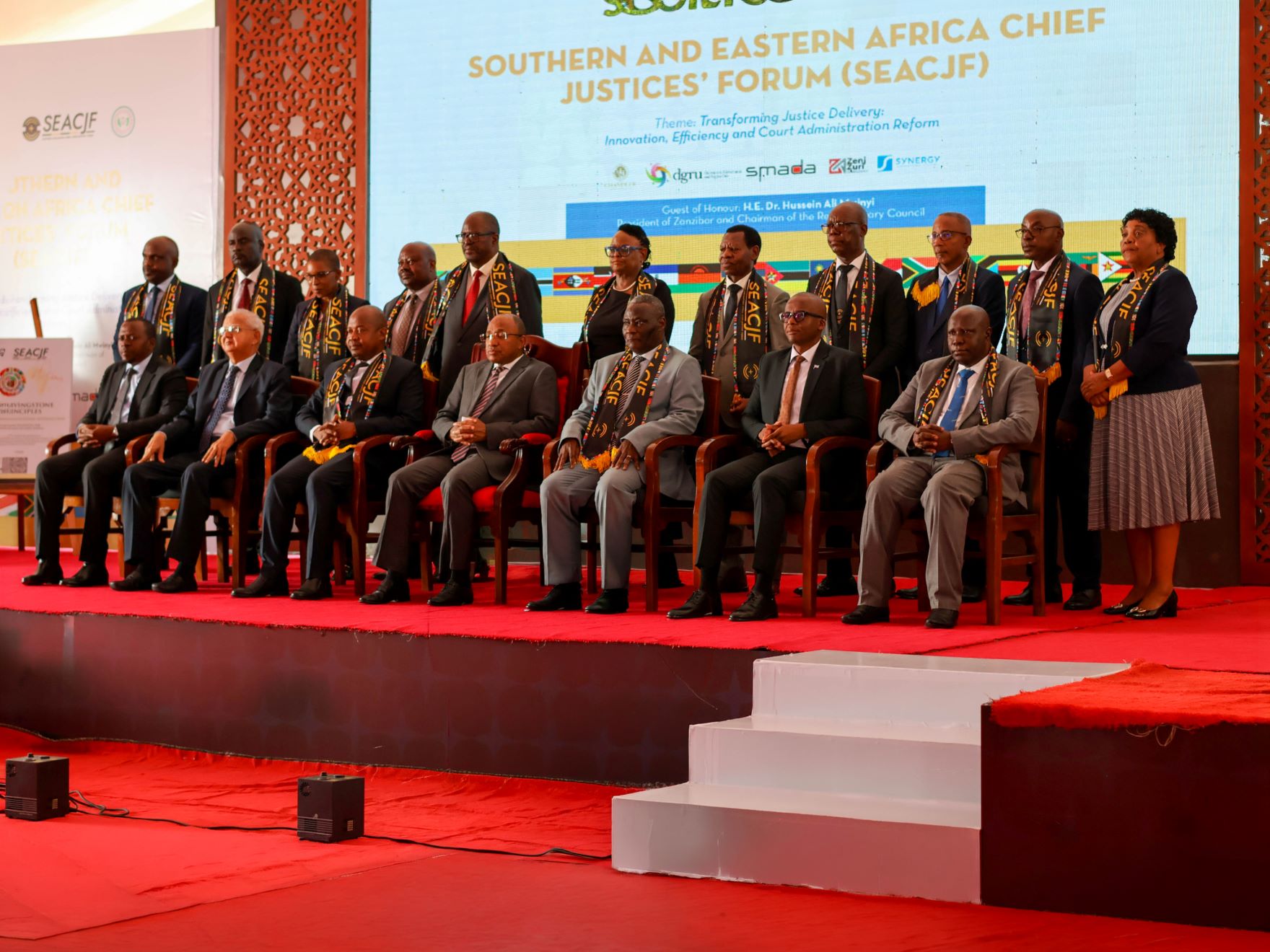
ZANZIBAR – At the 2026 Conference of the Southern and Eastern Africa Chief Justices’ Forum (SEACJF) in Zanzibar, the Chandler Institute of Justice (CIJ) presented its position paper on court-annexed alternative dispute resolution (ADR) to Chief Justices and senior judicial officials from across the region. The session was chaired by the Hon. George Masaju, Chief Justice of Tanzania, and brought together judicial leaders from four member jurisdictions to examine the evidence for embedding ADR within court systems as a structured tool for widening access to justice.
A Growing Demand that Courts Alone Cannot Meet
Across Africa, the demand for justice is growing faster than any court system can expand. Backlogs lengthen even as judicial output rises, constrained by a finite number of judges, courtrooms, and sitting days. For many citizens, formal adjudication is simply out of reach. As CIJ’s position paper argued, most disputes are already being resolved outside the courtroom. The question is not whether communities will find ways to settle their conflicts, but whether those settlements are reached fairly, safely, and in a manner the law can recognise and enforce. Court-annexed ADR offers a structured answer: it brings community-level dispute resolution under the authority and oversight of the courts, widening access to justice without waiting for judicial systems to grow.
What Works, and Why
Following CIJ’s presentation, judges from four member jurisdictions drew on their own experience: the Hon. Justice Meaza Ashenafi, Chief Justice Emeritus of Ethiopia; the Hon. Justice Harrison Mutabazi, Judge of the High Court and Judicial Spokesperson of Rwanda; the Hon. Justice Andrew Khaukha of Uganda; and the Hon. Justice Richard Mururu Mwongo, Judge of the High Court of Kenya.
Rwanda offered the most striking illustration of what is possible. After the 1994 Genocide against the Tutsi, Rwanda faced a caseload no conventional court system could clear. The community-based Gacaca courts demonstrated how local participation and restorative approaches can resolve disputes at scale while rebuilding trust in justice at the same time. The panel’s conclusion was consistent across all four jurisdictions: ADR works best when courts own it, design it around local realities, and support it with trained mediators and strong institutional frameworks.
In June 2026, CIJ received the People-Centred Justice Award at the Africa Chief Justices’ ADR Forum in Nairobi in recognition of its work supporting ADR reform across the continent. The Zanzibar session brought that work before the Chief Justices of Southern and Eastern Africa together, in one room.
Court-annexed ADR is not a substitute for strong courts. It is what strong courts do to make justice real for those who need it most.
About Chandler Institute of Justice (CIJ)
Chandler Institute of Justice offers expert advisory services on law reform, delivers specialised legal training programmes, and develops innovative legislative tools and models to support transformative law reform initiatives across Africa. CIJ’s work is anchored on the belief that good laws are not only the cornerstone of just and equitable societies but powerful catalysts for economic prosperity. CIJ’s mission is to partner with African governments to drive impactful, government-led law reforms while building legal knowledge and expertise that foster good governance, sustainable economic growth, and social mobility across the continent.